Spider Solitaire - Card Games
- 4.7
- Rating
- 10.00M
- Installs
- Free
- Price

 Analysis by App-foxy
I opened Spider Solitaire - Card Games expecting a familiar way to fill a few spare minutes, and that is exactly where it fits best. It is a card game from Fantasy Games Ltd built around the classic Spider Solitaire format: arrange cards into descending sequences, clear completed runs, and decide whether the next move is worth the risk. The rules are easy to recognize, but the decisions become surprisingly absorbing once the layout starts tightening.
What makes it appealing to me is the small, repeatable loop. I make a move, watch the columns change, gain a little room or create a new problem, and then decide whether to continue or restart. There is no complicated setup to learn before playing. It is a free game for Everyone, available on Android devices running at least Android 6.0, with optional in-app purchases ranging from $0.99 to $9.99 per item.
How the first move sets the whole game in motion
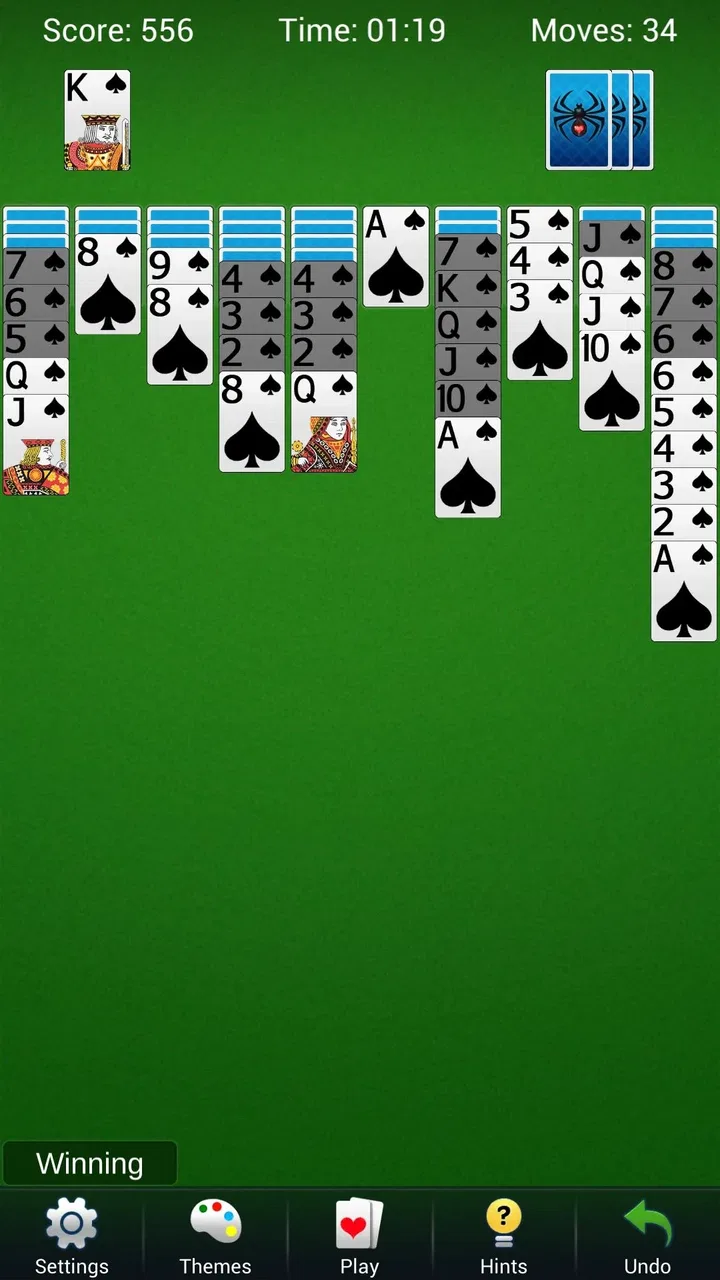
The first action in a Spider Solitaire round is usually simple: I look for a card that can be placed on the next card in descending order, then choose which column should receive it. That sounds routine, but the placement matters. A move can expose a useful hidden card, open an empty column, or leave a stack that becomes difficult to rearrange later.
You May Also Like

 AccuWeather: Weather Radar
AccuWeather Review: A Quick, Clear Forecast for Everyday Decisions
For everyday plans, the best forecast is the one you can understand quickly. AccuWeather makes rain timing, radar, and local conditions easy to act on, with a few trade-offs.

 Hill Climb Racing
Why Hill Climb Racing Still Turns Crashes Into One More Run
A tiny car, a bumpy hill and one more upgrade: Hill Climb Racing keeps resurfacing because its simple chaos makes every near-miss feel personal.

 AliExpress - Shopping App
AliExpress Makes Global Shopping Feel Personal, but Shoppers Bear the Risk
AliExpress turns a global marketplace into a pocket-sized discovery engine. Its reach is useful, its shopping loop compelling, and its trade-offs easy to miss.

 Lords Mobile: Kingdom Wars
Lords Mobile Is a Kingdom-Building Routine, Not a Quick Match
A case-by-case verdict on the building, battles, device demands, and social commitments that make Lords Mobile rewarding for some players and exhausting for others.

 PDF Scanner app - TapScanner
TapScanner Makes Paperwork Easier to Capture, Check, and Share
TapScanner makes scanning with a phone feel less like a rescue operation and more like a dependable step in getting work done. Its capture tools are useful, though not flawless.

 Block Blast!
 Shows How Much a Puzzle Game Can Leave Out
A quiet grid game shows why puzzle players increasingly value instant clarity, repeatable skill and low-pressure play—and where the genre still needs to catch up.
More From Our News Desk
View All News


I like that the game does not require a long tutorial before becoming playable. Anyone who has used a standard solitaire app can begin almost immediately, while a newcomer can understand the basic goal by following the visible card relationships. The challenge comes less from memorizing rules and more from learning to delay an attractive move when another option creates better space.
My practical advice is to avoid treating every available move as equally good. When two cards can be placed, I first consider which choice reveals more of the layout. Opening a column is often more valuable than making a neat-looking stack, because an empty space gives me flexibility for moving groups later. That is one of the first useful habits the game encourages without needing to explain it directly.
The familiar card-table design also helps keep attention on the puzzle. I am not navigating through a role-playing system, collecting characters, or learning a large set of modes. The entire focus is the arrangement in front of me. For people who want a quiet game that starts quickly, that narrow purpose is a genuine strength.
It is also why this will not suit everyone. If you want dramatic progression, competitive matchmaking, or a campaign with new mechanics, this is a much more restrained experience. Its pleasure comes from solving the current layout, not from building a long-term account or unlocking a world.
The feedback rhythm is clearer than the rules suggest
Every placement produces immediate feedback. A card moves into position, a column changes shape, and the next possible decision becomes easier or harder to see. When I uncover a hidden card, the game gives me a small but meaningful reward: new information. Sometimes that card solves a problem; sometimes it reveals that I have spent my flexibility too early.
This rhythm keeps a round moving even when I am not winning quickly. The feedback is not limited to completing a sequence. A newly exposed card, a cleared space, or a newly available transfer can all feel like progress. That makes the game more satisfying than a simple matching exercise, because each action changes the future choices rather than merely adding points.
I find the strongest moments happen when a move works two or three steps later. I may shift a short sequence to uncover a card, use that card to free another column, and then discover that the original move created the only route toward a completed run. The game rewards looking beyond the immediate placement, especially when the layout becomes crowded.
There is a useful distinction between visible progress and real progress. Building a long descending stack looks productive, but it can hide cards that I need elsewhere. On the other hand, breaking a tidy arrangement may create more options. I recommend checking the columns that are still blocked before celebrating a large stack. In this game, flexibility is often more valuable than appearance.
That is also where the experience can become frustrating. A poor early decision may leave the remaining cards technically movable but practically trapped. The game does not turn that situation into an exciting comeback every time. Sometimes the sensible choice is to stop spending attention on a layout that has lost its workable path and begin again.
Why a small reward can be enough
The main reward is the completion of a sequence and, eventually, the clearing of the layout. It is modest, but the game makes that modest reward feel earned because I can usually identify the decisions that led there. When the final arrangement comes together, I remember the awkward column I kept open or the tempting move I deliberately postponed.
For me, this is more satisfying than a purely automatic card animation. The result reflects planning, even when luck influences the available cards. A successful round gives a sense of closure, while an unsuccessful one often leaves a clear question: did I choose badly, or did the layout simply become too restrictive? That uncertainty is part of what brings me back.
The app’s broad reach supports that pick-up-and-play character. It has passed 10 million installs and holds a 4.7 average from roughly 83 thousand ratings, which suggests that the straightforward format connects with a large audience. Those figures do not replace personal testing, but they match my impression that this is designed as an accessible everyday card game rather than a specialist solitaire simulator.
I would especially recommend it for short breaks when I want something more engaging than scrolling but less demanding than a strategy game. A realistic use case is a commute or a waiting room: I can start a round, make a few careful moves, and either finish or leave the game without needing to remember a complicated storyline. The card layout itself tells me where I was when I return.
It also works well as a mental reset after work. I can focus on one visible problem at a time, compare two possible moves, and accept that not every round will resolve perfectly. That limited scope is calming for me, although players who find repeated puzzle failure stressful may prefer a more forgiving solitaire variant.
Knowing when to reset instead of forcing a round
The reset is an important part of the loop, not merely a sign that I have failed. Once the columns stop offering useful movement, continuing can become a slow search through choices that no longer improve the position. Restarting clears that mental clutter and gives me another chance to apply what I learned.
I try to reset for a specific reason rather than impulsively. If several columns remain blocked and I have no realistic way to expose new cards, I stop. If I can still open a column or rearrange a group to reveal information, I continue. This simple rule prevents me from abandoning a promising round just because the next move is uncomfortable.
Restarting also changes how I evaluate the previous attempt. Instead of asking only whether I won, I ask where the layout became inflexible. Did I use an empty column too early? Did I build a sequence that prevented access to a needed card? Did I choose a move because it was immediately available rather than strategically useful? That reflection makes the next round feel like a continuation of learning rather than a completely separate attempt.
The trade-off is repetition. The core game remains the core game, so players who need constant novelty may find the reset loop too narrow. Compared with a broader card app containing several solitaire types, this title offers less variety in exchange for a more focused experience. Compared with a physical deck, it removes setup and cleanup, but it also provides less tactile satisfaction.
Compared with a typical casual puzzle game, the pace is slower and the consequences of a move are easier to inspect. There are no rapidly changing objectives competing for attention. Compared with competitive card games, there is no opponent pressuring me into fast decisions. That makes it a better choice for quiet concentration, but a weaker choice when I want social tension or a sense of direct competition.
Small habits that make the card layout easier to solve
I get better results when I scan the whole layout before moving anything. I look first for cards that can be relocated without closing off a column, then for opportunities to expose hidden cards. This avoids the common mistake of starting with the most obvious move and discovering later that it consumed the space needed for a more important sequence.
Another useful habit is to treat an empty column as a temporary tool rather than a permanent parking place. I use it to move a group, uncover a card, and then consider how to refill it intelligently. Leaving a column empty can be powerful, but filling it with the first available sequence may remove the flexibility that made it valuable.
I also separate safe moves from speculative ones. A safe move exposes information or increases the number of future choices. A speculative move may look attractive but depends on a particular card appearing in the right place. When the layout is already tight, I favor the move that gives me more information, even if it does not immediately extend a sequence.
One non-obvious benefit of this approach is that losing becomes more informative. If I can identify the first point where my options narrowed, the next round has a practical purpose. I am not simply hoping for a better deal; I am testing whether a different order of moves preserves more space.
The game is also suitable for players who want a low-pressure way to practice visual planning. I would not describe it as a formal training tool, but it does encourage attention to order, available space, and delayed rewards. The best decision is often the one that looks less impressive now and creates more possibilities later.
What the current package means for everyday use
The app has been available since May 10, 2019, and its current version is 1.16.4.20251024. For me, that combination suggests an established game rather than a brand-new experiment. I appreciate that the basic experience is familiar enough to start quickly, while the current release gives users a maintained version to install on compatible Android devices.
It is free to download, which makes trying it straightforward. Optional purchases are present, priced from $0.99 to $9.99 per item. I would approach those purchases as extras rather than part of the reason to choose the game. The central appeal is the card loop itself, so I would first play normally and decide later whether any optional item genuinely improves my routine.
The Everyone age rating also fits the tone I experienced. This is a nonviolent, uncomplicated card game that can be handed to a wide range of players. Parents looking for something simple for a family member may find the format approachable, while experienced solitaire players can ignore the introductory simplicity and focus on making more efficient decisions.
One point worth considering before installing is device compatibility. The minimum requirement is Android 6.0, so older devices below that version are not a match. On a compatible phone, the game makes sense when I want an activity that can be opened quickly and put down without losing the entire evening to it.
Who should choose it, and who should look elsewhere
I would recommend this game to someone who already enjoys Spider Solitaire or wants a familiar card puzzle with a clean, repeatable structure. It is particularly good for solo players who like making their own decisions, noticing patterns, and trying to improve after a failed round. The large install base and strong average rating are consistent with that accessible appeal.
I would be more cautious recommending it to someone who needs a constant stream of new content. The game’s identity is its focused card challenge, and that focus can feel repetitive if the player expects missions, social events, or several radically different modes. A broader solitaire collection would be better for someone who wants to switch between Klondike, FreeCell, Pyramid, and other formats in one place.
It is also not my first choice for competitive players. A head-to-head card game or a timed multiplayer title would create more urgency and interpersonal challenge. Here, the opponent is effectively the layout and my own previous decisions. That makes the experience calmer, but it also means the motivation must come from solving the puzzle rather than defeating another person.
For a user who dislikes restarting, the experience may be uneven. The reset is essential to the design, and some rounds can reach a point where persistence feels less useful than beginning again. I see that as a natural trade-off of the classic format, but it is still a real limitation for anyone who wants every attempt to provide a clear path to success.
My verdict on the complete action-to-reset loop
After spending time with Spider Solitaire - Card Games, I see its appeal in the space between ease and consequence. The first move is approachable, the feedback arrives immediately, the reward is tied to decisions rather than spectacle, and the reset gives me a clean chance to try a better plan. That loop is simple enough for a spare minute but deep enough to hold attention when I want to solve the layout properly.
My strongest recommendation is to play it deliberately rather than rushing through available moves. Protect open columns, prioritize information, and treat every exposed card as a clue about what the layout may allow next. Those habits make the game feel less like random card movement and more like a compact planning exercise.
Fantasy Games Ltd has kept the experience centered on the classic card challenge, which is both its strength and its boundary. I enjoy it when I want a quiet solo game with no learning curve and a satisfying reason to start one more round. I would skip it in favor of a broader or more competitive alternative when variety, opponents, or long-term progression matter more than the pleasure of arranging one difficult deal.
For my own phone, it earns a place as a dependable short-session game. I can open it during a pause, make meaningful choices without a complicated commitment, and walk away after a win or a sensible reset. If that focused rhythm sounds more appealing than a busy collection of features, this free Spider Solitaire title is an easy one for me to recommend.
FAQs for Spider Solitaire - Card Games
01What are the main features of Spider Solitaire - Card Games?
Spider Solitaire - Card Games offers several intriguing features, including multiple difficulty levels, customizable card designs, and intuitive touch controls. The game also includes daily challenges and a hint system to help players strategize. It’s a modern twist on a classic card game, designed to provide both casual and challenging gameplay experiences.
02Is Spider Solitaire - Card Games free to download and play?
Yes, Spider Solitaire - Card Games is free to download and play on both Android and iOS devices. However, the app may offer optional in-app purchases to enhance the gaming experience, such as removing ads or accessing premium features like additional card designs or themes.
03Does Spider Solitaire - Card Games require an internet connection?
Spider Solitaire - Card Games can be played offline, making it a great option for users who want to enjoy the game without needing an internet connection. However, an internet connection is required for accessing certain features, such as daily challenges and leaderboards.
04How user-friendly is the interface of Spider Solitaire - Card Games?
The interface of Spider Solitaire - Card Games is designed to be highly user-friendly, with clear and intuitive controls. New players will find it easy to navigate through the menus, and there is a helpful tutorial for beginners. Experienced players will appreciate the streamlined design that focuses on gameplay.
05Are there any ads in Spider Solitaire - Card Games?
Yes, the free version of Spider Solitaire - Card Games does contain ads, which may appear between games or during gameplay. Users can opt to make an in-app purchase to remove ads for an uninterrupted gaming experience. This is a common practice to support the development of free apps.
Pros
- Smooth gameplay with intuitive controls.
- Customizable card designs and backgrounds.
- Daily challenges to keep players engaged.
- Offline mode available for uninterrupted play.
- Minimal ads for a seamless experience.
Cons
- Limited hints can frustrate beginners.
- No multiplayer mode for competitive play.
- Ads can be intrusive in free version.
- Requires frequent updates for new features.
- Occasional crashes on older devices.

Spider Solitaire - Card Games
Gallery